
This basic guide for beginners covers almost all aspects of grape cultivation right from varieties and sowing to harvesting and yield. It also covers grape uses, health benefits, varieties, and nutrition value of grape fruits.
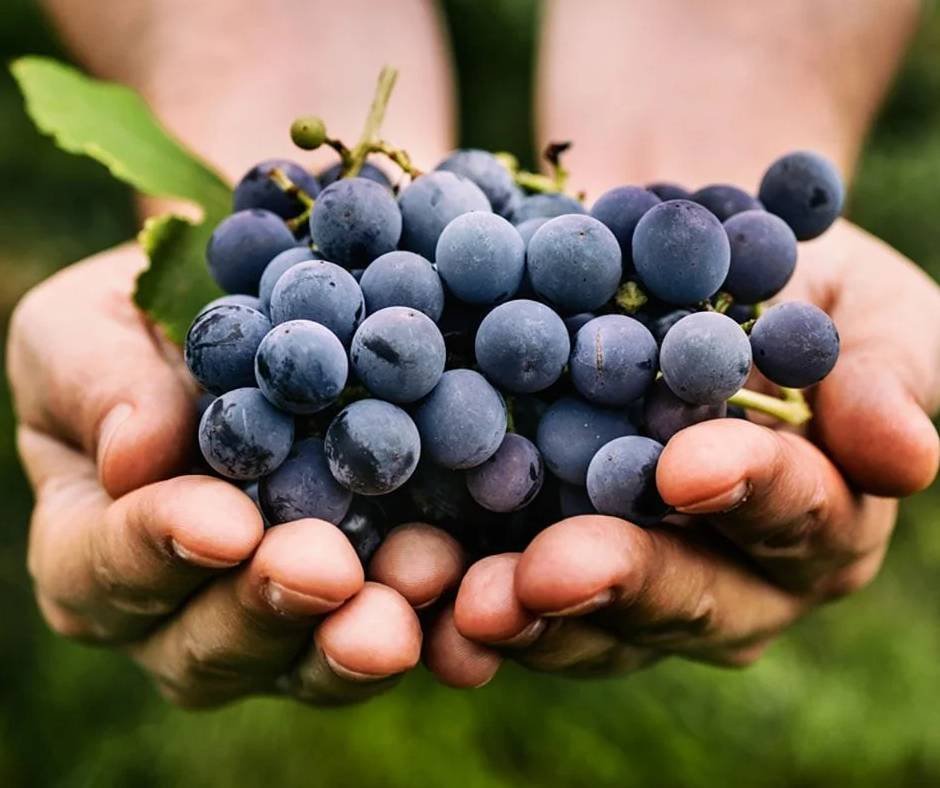
Grapes are true berries. The fruit wall (pericarp) is fleshy throughout. Fruit can be green, red, and deep purple.A grape crop is a deciduous woody vine belonging to the flowering plant genus vitis.
Varieties
- By Purpose
- For Dry Area
- For making raisins: Thompson Seedless, Black Sahebi
- For raw eating: Thompson Seedless, Beauty Seedless, Black Sahebi, Anab-e-Shahi, Thompson Seedless: Bunches are big, equal sized grape, the grape is medium long, green color fruits turn golden at maturity, fruit is seedless, hard and good taste, late maturing variety.
- Regions
- Northern India: Haryana, Punjab, Delhi, Western Uttar Pradesh, Rajasthan
- Southern India: Telangana & Rayalaseema regions of Andhra Pradesh
Planting & Sowing
Season of Planting
- North India
- Between February and March
- Peninsular India
- Between November and January
- Tamil Nadu & Karnataka
- Between December and January
- Sowing Depth
- 1m
- Spacing (Knifing)
- 3m x 3m
- Spacing (Arbour)
- 5m x 3m
- Crop Duration
- 3-5 mo
Irrigation Systems
Drip Irrigation Best Practices
In case of drip irrigation, only one emitter is placed at the base of the vine initially. The number of emitters gradually increases to two and then four which are shifted about 30 or 40 cm away from the stem depending upon the variety and spacing of the vines.
| Time Period | Irrigation Frequency |
|---|---|
| After pruning in 1st fortnight of Feb | One irrigation |
| First week of March | One irrigation |
| After fruit set in April till 1st week of May | At 10 days interval |
| During the rest of May | Weekly interval |
| June | 3 or 4 days interval |
Diseases & Management
Powdery Mildew
Uncinula necator
Symptoms:
- Powdery growth mostly on the upper surface of the leaves.
- Malformation and discolouration of affected leaves.
Management:
- Spray Inorganic sulphur 0.25 % or Chinomethionate 0.1% or Dinocap 0.05%.
- Spray 0.3% Wettable sulphur or dust Sulphur @ 6-12 Kg/ha in the morning hours to control the fungus.